Backrooms 2D
Games You May Like
🏚️ What Liminal Spaces Reveal About Horror
Backrooms 2D transforms the suffocating 3D liminal horror of internet creepypasta into something deceptively casual: a pixel-art mobile game with simplified controls and grid-based movement. By compressing the infinite vertical and horizontal complexity into a 2D plane, the developers paradoxically intensify claustrophobia through constraint. You can't look up or down. You can't strafe sideways unpredictably. Movement becomes binary decisions—forward, back, left, right—forcing players into predictable patterns that the procedural generator learns to exploit. The retro pixel aesthetic adds a second layer of cognitive dissonance: cheerful 8-bit graphics paired with existential horror creates a tonal friction that makes the dread feel more intrusive.
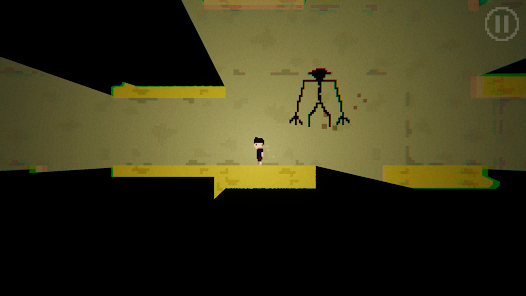
🎨 Sprite-Art Atmosphere and the Uncanny Valley of Pixel Corridors
Backrooms 2D succeeds visually through deliberate understatement. Rather than photorealistic hallway textures, pixel-art walls repeat in mathematically obvious patterns—yellow tiles, identical doorways, carpet stains that tile every 16 screens. This simplicity should feel calming compared to 3D versions, yet it triggers the opposite effect. The repetition becomes audibly visible. Your brain recognizes the loop and knows something is calculating this—you're not lost in a real place, you're trapped in an algorithm's output. Sprite constraints mean each NPC or threat uses minimal animation frames, creating jerky, unsettling movement that feels more "wrong" than smooth high-poly models ever could.
⬅️➡️ Grid Movement as Survival Mechanic
Casual horror through mechanical simplification: Backrooms 2D strips movement to directional button presses, eliminating the analog stick micromanagement of 3D versions. This streamlining sounds easier, but creates bizarre survival pressure. Stamina depletes faster with each sprint. Threats move on predictable grid intervals. Sound propagates in clear Manhattan-distance patterns. Veteran players discover that turn efficiency—whether you move diagonally first or straight—determines whether you escape or get cornered. The fixed grid exposes strategy that 3D games hide through perspective chaos. Backrooms 2D becomes a roguelike deck-builder: each corridor tile is a card you play, and bad position choices stack into inescapable dead-ends.

♾️ Procedural Infinitude and the Algorithm's Cruel Creativity
Unlike scripted horror, Backrooms 2D's endlessness comes from procedural generation—the same algorithm that builds each run also learns from player patterns. Early runs feel almost navigable; veterans describe later playthroughs as "the game adapting to counter you." Whether this is actual difficulty scaling or player perception debated in forums endlessly, the belief in the algorithm's malevolence becomes the real horror. Rooms that seemed safe last run block off mysteriously this run. Exits appear in unlikely-seeming positions. The game isn't cheating—the math just feels unfair because you're playing against pure probabilistic chaos that occasionally peaks at hostile configurations.
📱 Casual Dread: Horror for the Commute
Backrooms 2D's mobile-first design paradoxically deepens its horror impact. Short 10-15 minute runs mean you can quit anytime—which makes quitting a real decision. Do you keep going or accept the loss? Phones are distracting devices; Backrooms 2D forces you to mute everything else, creating an intimate 1-on-1 with pixel dread during mundane moments (bus commutes, lunch breaks, bathroom waits). The juxtaposition intensifies the atmosphere: you're in a safe, public place, but the game's narrative logic demands you feel trapped. Free-to-play accessibility means no commitment barrier—you install it on a whim and 30 minutes later you're stress-testing your pulse over a 16-bit corridor maze. If you want liminal horror that fits in your pocket and challenges your decision-making speed, Backrooms 2D delivers casual-yet-intense pixel-perfect dread.
Hot Games

New Games

