Dreadhead Parkour
Games You May Like
Run, Flip, and Flow Through the City in Dreadhead Parkour
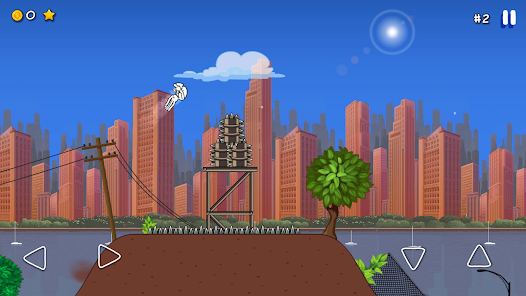
Dreadhead Parkour is a free-running game that captures the raw energy of street-level athleticism and translates it into a fast, satisfying 2D experience. You play as a dreadlock-sporting parkour athlete navigating urban environments by leaping between rooftops, vaulting obstacles, sliding under barriers, and chaining together fluid movement combinations that feel incredibly smooth when they connect.
What sets Dreadhead Parkour apart from other runner games is the focus on player expression. The controls are responsive enough that you can genuinely feel the difference between a sloppy run and a clean one — between a panicked scramble and a perfectly timed sequence of vault, wall-jump, and roll that carries your speed all the way to the next platform.
Core Movement Techniques
Mastering Dreadhead Parkour means internalizing a set of movement tools and knowing instinctively which one fits each situation:
- 🏃 Sprint and dash: Your baseline speed. Holding the run button builds momentum that carries into jumps, making distance clears much more forgiving when you maintain it.
- 🔄 Flip and aerial rotation: Initiated while airborne, flips add style but also serve as a mid-air repositioning tool that can adjust your landing angle on tight surfaces.
- 🧱 Wall jump: Pressing jump against a vertical surface launches you upward and away. Chaining multiple wall jumps is how you scale tall obstacles quickly.
- 🛝 Slide: Pressing down while running initiates a slide that passes under low ceilings and obstacles, maintaining forward speed rather than stopping you dead.
- 🤸 Roll on landing: A correctly timed roll after a high drop absorbs the impact and keeps you moving, while a late press results in a hard landing that costs speed.
How to Chain Smooth Movement Combos
The real skill gap in Dreadhead Parkour is not about raw speed — it is about maintaining momentum through consecutive obstacles without losing flow:
- ⚡ Never sacrifice momentum for safety: Taking the cautious path through a section often costs more time than a bold jump that maintains full speed. Read the terrain ahead and commit early.
- 🎯 Look ahead, not at your feet: The instinct is to focus on the immediate obstacle. Scanning two or three obstacles ahead is what separates smooth runs from choppy ones.
- 🔄 Cancel into slides early: Transitioning into a slide before you reach a low barrier — rather than at the barrier — gives you a cleaner animation entry and maintains more speed.
- 🌀 Use flips for style scoring: In levels where combo scoring matters, flipping during long airtime segments adds substantial style points without significantly slowing you down.
- 💡 Memorize level patterns: Unlike endless runners, Dreadhead Parkour has structured levels with fixed layouts. Learning sequences allows you to execute moves before the obstacle even appears in frame.
Why the Flow State Keeps You Replaying
The best runs in Dreadhead Parkour feel like an improvised dance through the city — a sequence of snap decisions that somehow form a perfectly timed chain of motion. That feeling is fleeting but intensely satisfying, and it is why players return to levels they have already completed to try for cleaner lines and faster times.
Tips to Sharpen Your Parkour Skills
- 🏃 Build and protect your sprint momentum at all costs — it is the most valuable resource in every level and takes time to rebuild after a dead stop.
- 🧱 Practice wall jumps in low-stakes platform sections before attempting them in timed runs — the timing window is tighter than it looks.
- 🛝 Slide early for low obstacles rather than late — entering the slide animation before you reach the barrier results in a much smoother pass-through.
- 🎯 In combo-scoring levels, plan which sections to use for flips rather than attempting them everywhere — some sections are not worth the risk of mistimed landings.
- 🔁 Replay levels even after clearing them — a cleaner personal best always teaches you something new about the level's rhythm that you did not see on the first pass.
Hot Games

New Games

