Flappy Bird
Games You May Like
The Game That Stopped the Internet
Few games have had the cultural impact of Flappy Bird. Created by Vietnamese developer Dong Nguyen and released quietly in 2013, it spent months in obscurity before detonating into a full-scale global phenomenon in early 2014. Within weeks it was the most downloaded free app in both the iOS App Store and Google Play. Celebrities were tweeting about it. News networks were covering it. And then, at the peak of its popularity, Dong Nguyen pulled it from the stores entirely — citing the stress of its overwhelming success as the reason.
That disappearance only deepened the legend. Phones with the game installed were selling on eBay for hundreds of dollars. The game became more famous for being gone than most games ever become from being present. Today, browser versions keep the original spirit alive and let a new generation discover why those green pipes drove the entire world briefly, magnificently insane.
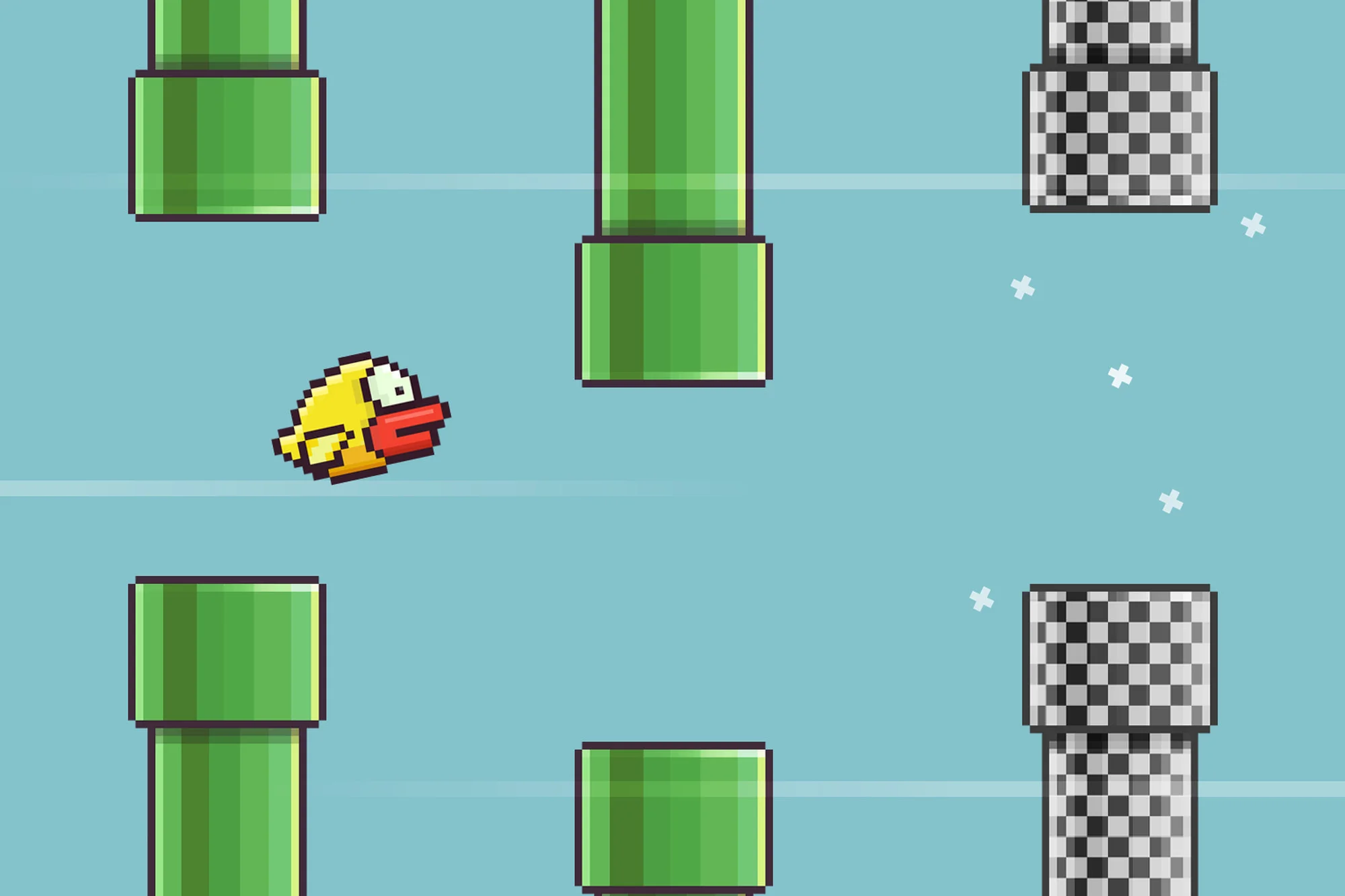
One Tap. Infinite Gravity. Pure Frustration.
The mechanic is brutally elegant. Your bird falls constantly — gravity never stops pulling it downward. Each tap sends it flapping briefly upward. Your only job is to thread the gap between each pair of pipes without touching them or the ground. That is it. No power-ups, no checkpoints, no lives bar. Every mistake ends the run immediately and your score resets to zero.
The pipe gaps are fixed in height, but the gap positions vary between pairs — sometimes high, sometimes low, occasionally in the middle. The bird's arc is parabolic, meaning a single tap near a high gap requires different timing than a tap approaching a low one. Players who get genuinely good at Flappy Bird are not reacting to each pipe — they are reading two or three pipes ahead and planning their tap rhythm in advance.
Why Scores Above 10 Feel Like an Achievement
The game's difficulty is calibrated in a way that makes single-digit scores feel like normal and double-digit scores feel like a genuine accomplishment. The bird's physics are intentionally unforgiving — the margin between clearing a pipe and clipping it is measured in pixels. This is not a bug or a design oversight; it is the entire point. The tension lives in that pixel-thin gap, and the satisfaction of threading it cleanly is why one more try always feels justified.
Tips to Actually Improve Your Score
- 🎯 Tap lightly and often: Short, frequent taps give you more control over your altitude than long holds between taps. The bird's arc is sharper than it looks — small corrections beat big recoveries.
- 👁️ Read ahead, not at the current pipe: Focus your attention on the next gap while clearing the current one. Players who look at the pipe they are passing always react too late to the one coming next.
- 📐 Find your hover altitude: In the early pipes, establish a mid-screen altitude and maintain it through consistent tap rhythm rather than constantly adjusting to each pipe's position.
- 🧘 Breathe through long gaps: The spaces between pipes are where panic kills most runs. Resist the urge to tap aggressively in open space — stay calm and position yourself for the approaching gap.
- 🔁 Restart without frustration: The best Flappy Bird players treat each run as practice rather than an attempt. Consistency comes from volume of runs, not from any single heroic effort.
Hot Games

New Games

