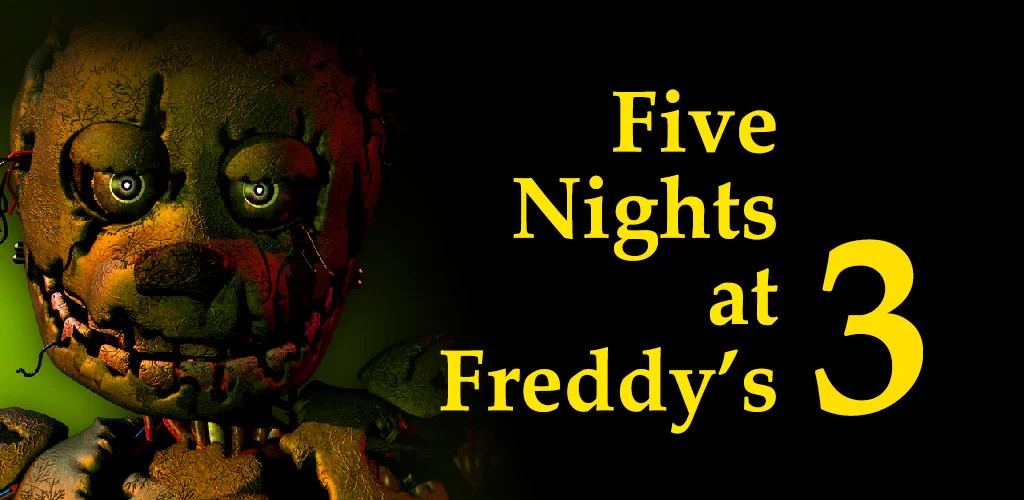
Five Nights at Freddy's 3
Games You May Like
🧟 FNAF 3 Is a Different Kind of Fear
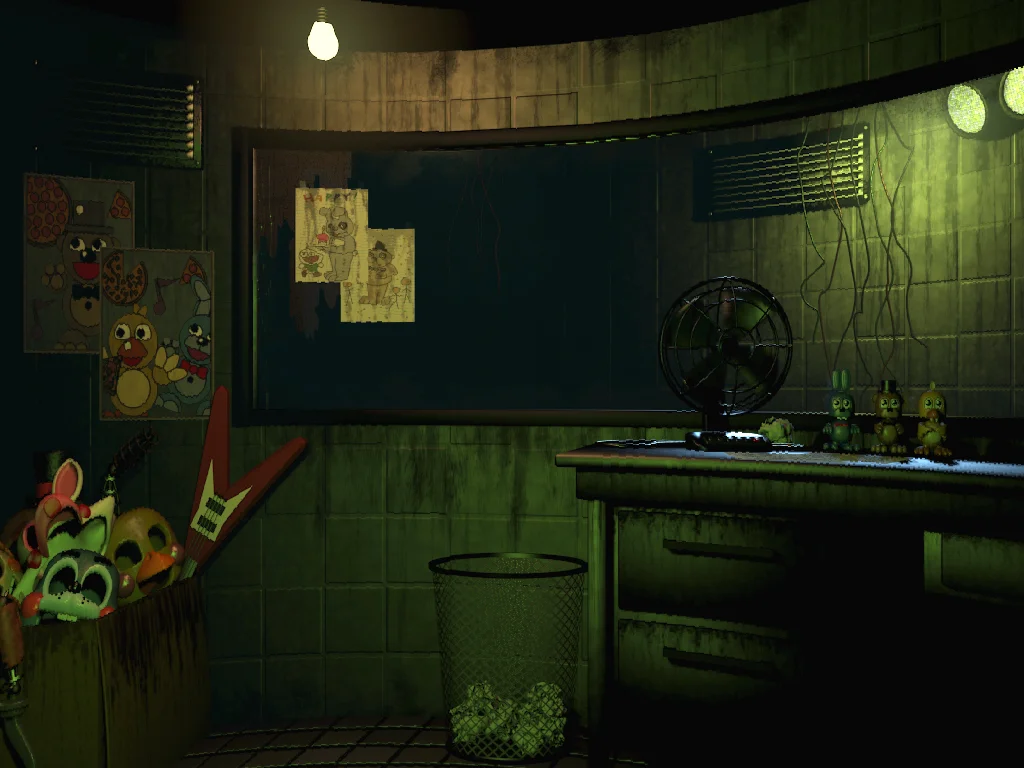
Five Nights at Freddy's 3 moves the series away from pure swarm pressure and turns it into a focused psychological hunt. You work as a guard inside Fazbear's Fright, a horror attraction built from the remains of Freddy lore. The twist is brutal: there is only one true killer hunting you directly, Springtrap, but the environment itself constantly breaks down and Phantom animatronics sabotage your control flow. This design makes every second feel unstable. You are not just surviving a monster. You are surviving a collapsing surveillance system while trying to manipulate that monster's movement.
🎯 Core Objective: Control Springtrap's Route
In FNAF 3, winning is about influence, not blocking. You cannot close doors like FNAF 1, and you cannot rely on the Freddy mask loop from FNAF 2. Instead, you must repeatedly lure Springtrap away from your office by triggering audio cues in specific camera rooms and sealing vents to restrict his path options. This creates a tactical mini-game every few seconds: track his location, decide the best lure room, then lock the most dangerous vent approach.
- Locate Springtrap: confirm his camera position before acting.
- Play bait audio: pull him toward safer sectors of the map.
- Seal high-risk vents: deny quick flanks toward your office.
- Recheck and adapt: if he ignores bait, rotate strategy immediately.
🛠️ Triple-System Management Under Stress
The game's signature pressure comes from three critical systems that can fail at bad moments:
- 📷 Camera System: if this fails, you lose map vision and cannot track Springtrap reliably.
- 🎧 Audio Devices: if audio dies, your main lure tool disappears and Springtrap gets freedom.
- 🫁 Ventilation: if ventilation fails, hallucinations and disorientation spike rapidly.
Unlike earlier entries, FNAF 3 punishes greedy multitasking. Over-focusing on one issue often creates two more. Repair timing is therefore a strategic layer: sometimes the best move is to quickly re-establish audio first, then camera, because controlling Springtrap matters more than perfect information for a short window.
👻 Phantom Animatronics and Cognitive Overload
Phantoms are not direct killers, but they are exactly why many runs collapse. They trigger jump interruptions that disable systems, waste time, and force emergency resets while Springtrap keeps moving. In practical play, phantoms function as tempo breakers. They punish tunnel vision and create fear through uncertainty. You may think you are safe because Springtrap is distant, then lose momentum to a phantom event, then find him suddenly one vent away.
📚 Deep Strategy Notes for Consistent Clears
- 🧭 Anchor rooms: choose 1-2 bait zones you trust and rotate around them instead of improvising every cycle.
- ⛔ Vent priority: always seal the vent that shortens Springtrap's approach the most, not just the closest visual vent.
- 🔁 Micro-cycles: run short loops: locate, lure, vent check, system check, repeat.
- 🧠 Ignore panic bait: phantom fake-outs are designed to break rhythm; recover pattern quickly instead of overreacting.
- ⏳ Late-night discipline: 4 AM onward rewards conservative, repeatable decisions more than risky high-value plays.
🧪 Why FNAF 3 Stands Out in the Trilogy
FNAF 3 is often misunderstood as simpler because it has one primary hunter, but in practice it is one of the most system-oriented entries. It tests planning, recovery, and pressure management more than raw reflexes. If FNAF 1 is about power economy and FNAF 2 is about reaction rhythm, FNAF 3 is about information control and failure containment.
🏁 Final Verdict
Five Nights at Freddy's 3 delivers a tense, methodical horror experience with deeper tactical decision-making than many players expect. For anyone who enjoys high-pressure management gameplay and wants a more strategic FNAF challenge, this chapter is essential.
Hot Games

New Games

