Gun Mayhem
Games You May Like
Gun Mayhem Is Platform Arena Chaos Built Around Knockback, Not Just Raw Damage
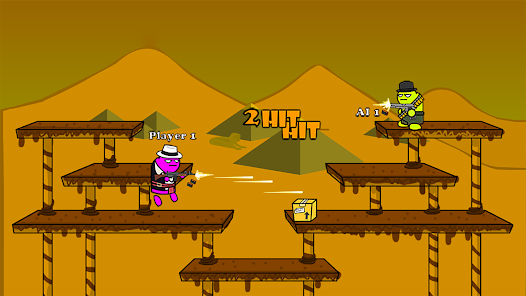
Gun Mayhem blends side-view shooting with platform movement where ring-out pressure is often deadlier than bullet damage. Players scramble for weapon crates, juggle recoil, and try to blast opponents off small arenas before getting launched themselves.
What keeps matches fresh is tempo variety. Early rounds can feel controlled, but once explosive weapons and heavy knockback enter the mix, each platform becomes a hazard zone where one bad jump can end the stock instantly.
Fundamentals for Cleaner Wins
Gun Mayhem rewards position control more than reckless rushing. Holding center platforms, denying crate pickups, and managing jump timing under fire produce more consistent results than all-in pushes every spawn cycle.
- Fight for platform center to reduce ring-out angles from both sides.
- Contest weapon crates early; loadout advantage snowballs quickly.
- Use short hop movement to bait shots before committing to return fire.
- When low on footing, prioritize recovery position over risky trades.
- In multiplayer, focus weak targets to convert chaos into clean eliminations.
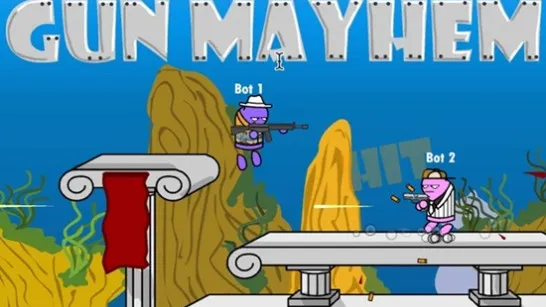
Gun Mayhem remains a top browser party shooter because every round is readable, fast, and wildly replayable. The controls are simple enough for instant fun, but spacing and knockback management create a real skill ceiling for competitive rematches.
Advanced Consistency Notes for Gun Mayhem
Once your basic runs are stable, the next jump in performance usually comes from cleaner decision sequencing. Instead of reacting to each moment independently, treat the run as a chain where each choice sets up the next one.
Players who improve fastest in Gun Mayhem review repeat failure patterns and fix one category at a time. This method compounds quickly because fewer repeated mistakes means more quality attempts per session.
- Start each session with one low-risk warm-up run to rebuild timing rhythm.
- Track which situations fail most often and isolate them in focused retries.
- Prefer repeatable setups over flashy high-variance plays when building consistency.
- Take short resets after mistakes so frustration does not distort decision quality.
- When performance drops, slow down and re-center on core fundamentals first.
- Use small adjustments between attempts rather than changing your whole approach.
- Review successful runs to identify what should become your default pattern.
Replay Value and Skill Growth
Gun Mayhem remains rewarding over time because progress is measurable. Better routing, sharper timing, and cleaner execution translate directly into more reliable outcomes.
That feedback loop keeps sessions engaging: each run teaches something concrete, and each correction makes the next attempt meaningfully stronger.
Extra Advanced Notes
At higher difficulty, consistency comes from repeatable micro-decisions rather than raw reaction speed. Building a stable sequence for the most dangerous moments increases success rate dramatically over long sessions.
Use short review cycles after failures, preserve what worked, and adjust only one layer at a time. That controlled refinement produces faster progress than frequent full-strategy resets.
- Identify one recurring failure point and solve it before optimizing anything else.
- Convert successful patterns into a default route you can execute under pressure.
- When momentum breaks, reset to fundamentals and rebuild cleanly.
Hot Games

New Games

