Hollow Knight
Games You May Like
🛡️ About Hollow Knight
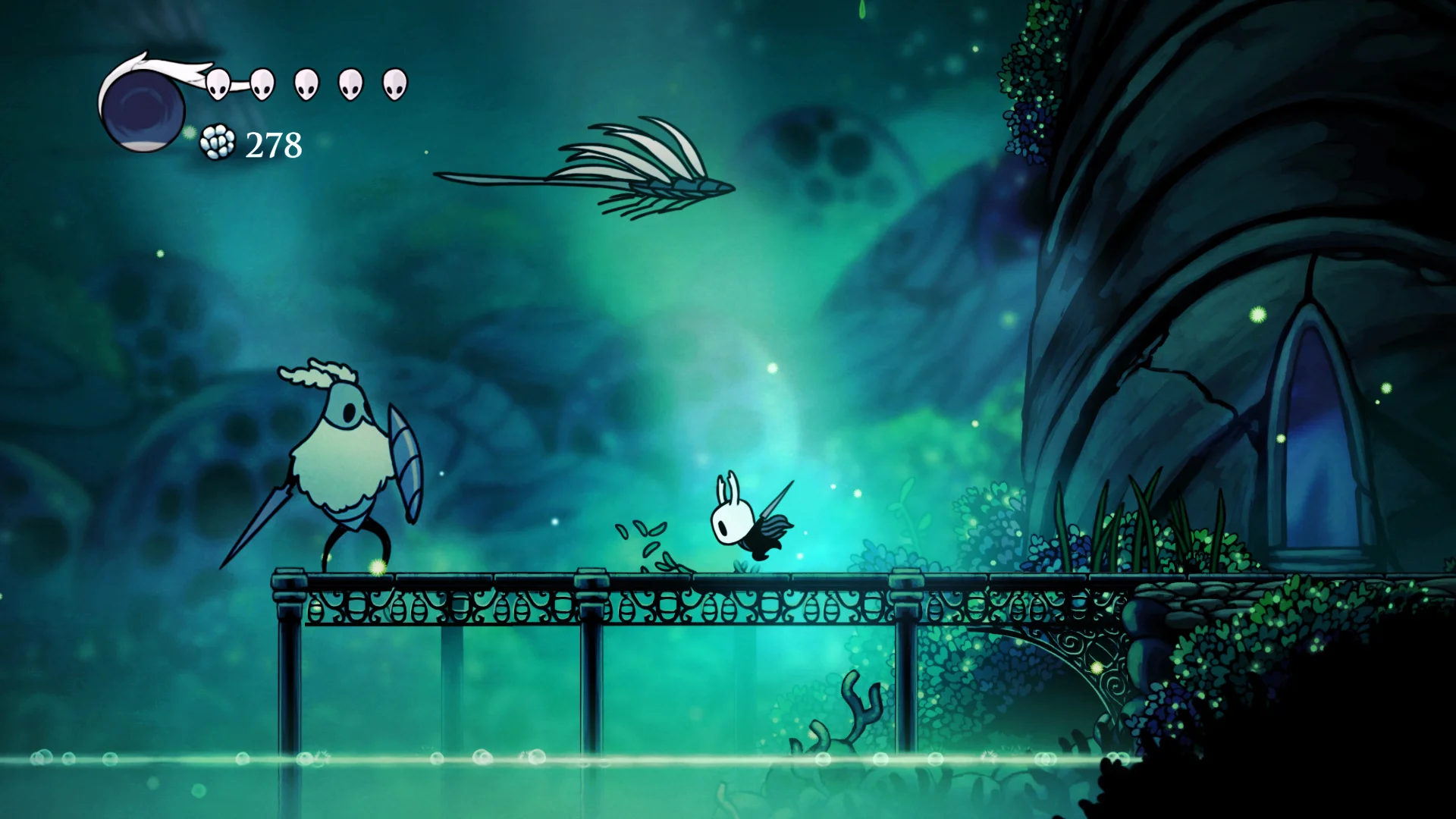
Hollow Knight is a critically acclaimed action-adventure Metroidvania developed by Team Cherry, released in 2017 and widely regarded as one of the finest games in the genre. You play as a small, silent insect warrior — the Knight — descending into Hallownest, a once-thriving underground kingdom now consumed by an ancient infection. What begins as a journey into shadow quickly unfolds into one of gaming's most layered explorations of legacy, sacrifice, and forgotten history.
Hallownest is enormous. Spanning over a dozen interconnected regions — from the luminous Fungal Wastes and the harrowing Deepnest to the crystalline Crystal Peak and the flooded Royal Waterways — each area carries its own visual identity, enemy roster, and atmospheric weight. The world is designed to be discovered without hand-holding: paths split, secrets hide in plain sight, and the map fills in only as you explore, capturing the feel of genuine discovery that few games sustain across 30+ hours.
⚔️ Combat: The Nail and Soul System
Combat in Hollow Knight revolves around two core tools. Your Nail — a sharpened insect weapon — handles up to close-range combat with precise, directional swings that can be upgraded four times across the game. Soul, earned by striking enemies, fuels your healing spell (Focus) and three increasingly powerful offensive spells: Vengeful Spirit, Desolate Dive, and Howling Wraiths. Managing the tension between using Soul to heal versus spending it aggressively on spells defines Hollow Knight's combat philosophy at every difficulty level.
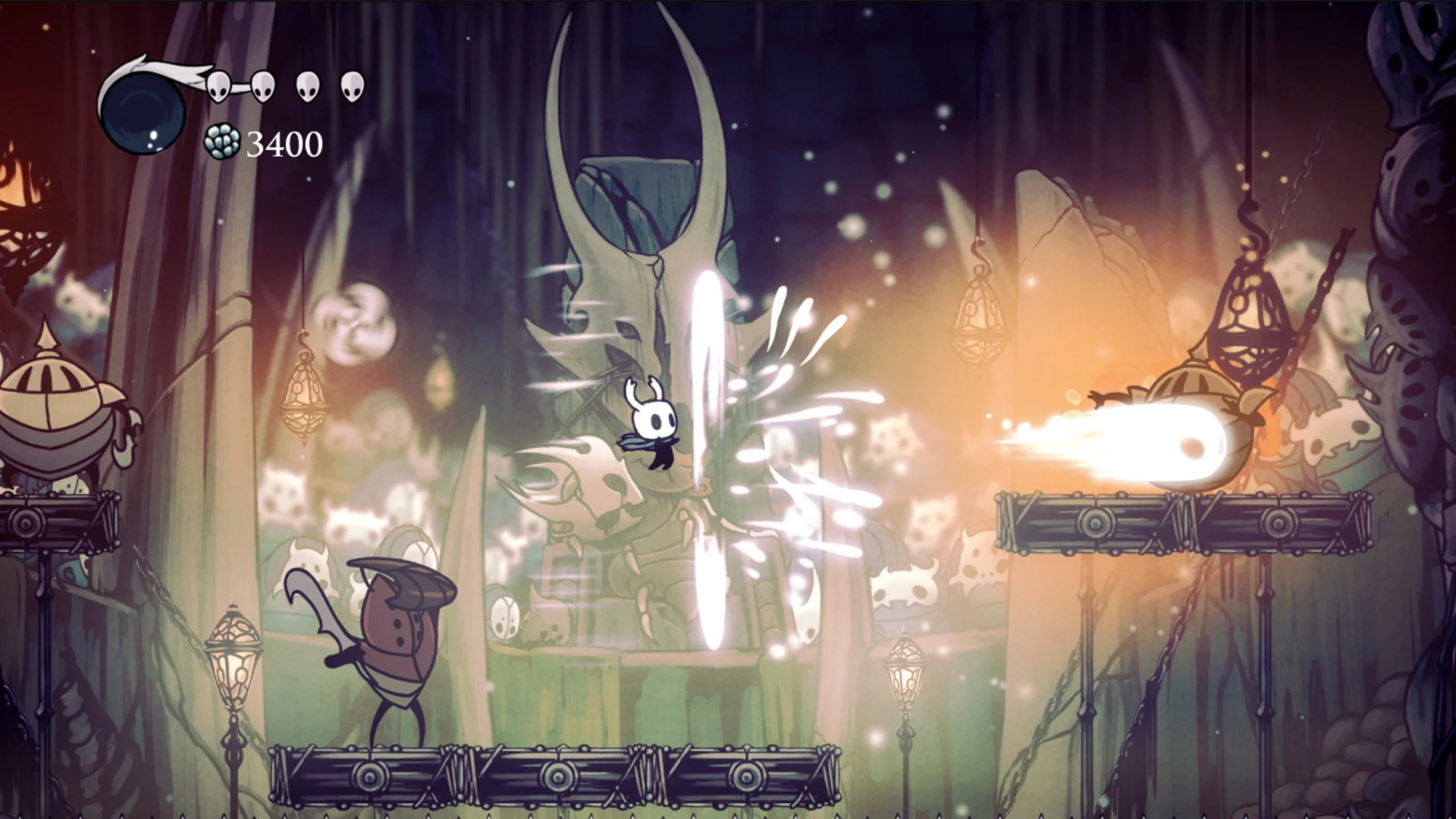
Boss encounters are where this system shines hardest. Hollow Knight features over 40 boss fights, ranging from optional Warrior Dreams scattered through hidden rooms to mandatory Dreamers blocking access to the final areas. Each boss is a distinct mechanical puzzle — learning telegraphs, timing parries with the Nail Art moves, and deciding when to burn Soul versus when to conserve it for recovery. The game's optional Pantheon challenges in Godmaster stack bosses in brutal marathon sequences for players who want to test mastery of every mechanic simultaneously.
✨ The Charms System and Build Flexibility
One of Hollow Knight's most creative systems is its Charms — 45 equippable items that fundamentally alter your playstyle. Charms occupy Notch slots (which can be expanded by finding and purchasing additional Notches), and many can be combined into Fragile/Unbreakable combinations for amplified effects. A few examples of what Charms enable:
- 🔮 Quick Slash: dramatically increases attack speed, turning the Knight into a flurry of rapid Nail strikes.
- 💣 Shaman Stone + Spell Twister: boosts spell damage and reduces Soul cost, enabling a pure magic build.
- 🐝 Grubsong + Grubberfly's Elegy: rewards full-health play with ranged nail projectiles — a markedly different playstyle from aggressive melee.
- 💪 Stalwart Shell + Quick Focus: defensive setup that prioritizes safe healing windows over offensive pressure.
No single build dominates every situation, which gives each new playthrough a different feel and invites experimentation across the game's many optional challenge rooms.
🗺️ Exploration, Lore, and the Dream Nail
Hollow Knight tells its story almost entirely through environmental storytelling, NPC dialogue, and the Dream Nail — a weapon that lets you read the memories and dreams of enemies, bosses, and fallen warriors. This mechanic is the key to understanding Hallownest's lore, which the game never spells out directly. The history of the Pale King, the origin of the Infection, and the identity of the Hollow Knight itself are all assembled from fragments spread across the map. Players who dig into every corner and dream-read every NPC encounter are rewarded with a narrative that is remarkably detailed for a game with almost no cutscenes.
🎯 Tips for New Players Entering Hallownest
- 🗺️ Buy the Quill early: purchase it from Iselda in Dirtmouth so your map fills in automatically as you explore, rather than only when you sit at a bench.
- 📍 Place pins liberally: mark interesting spots you couldn't access yet — the map becomes your primary planning tool.
- ⚔️ Upgrade your Nail as soon as possible: the damage multiplier from each upgrade is significant and makes most early-game fights substantially easier.
- 🔧 Do not ignore Grubs: rescuing Grubs unlocks rewards from Grubfather that include critical Masks (health upgrades) and Rancid Eggs.
- 💰 Bank Geo before tough bosses: Geo is lost on death and stored separately — deposit it with Millibelle to avoid losing progress.
- 🎮 Try every boss several times before looking up strategies: pattern recognition is the core skill, and most fights click after 3–5 attempts.
⭐ Why Hollow Knight Remains Essential
Nearly a decade after release, Hollow Knight still sets the benchmark for Metroidvania design. Its combination of precise, demanding combat, a world that rewards curiosity at every turn, a Charms system that genuinely diversifies runs, and a melancholy atmosphere delivered through Christopher Larkin's extraordinary score makes it one of the most complete experiences in its genre. Whether you are entering Hallownest for the first time or returning to find every hidden ending, it earns every hour it asks of you.
Hot Games

New Games

