Infinite Craft
Games You May Like
Four Elements, Infinite Possibilities
Infinite Craft is a browser-based sandbox created by Neal Agarwal and launched on neal.fun in January 2024. You begin with four fundamental elements: Water, Fire, Wind, and Earth. Drag any two together, and the game generates a new concept, complete with its own emoji icon. That new concept can then be combined with anything else on your workspace, creating a branching tree of discoveries that theoretically never ends.
What makes Infinite Craft remarkable is its AI backbone. When you attempt a combination that no one has tried before, a language model generates a plausible result in real time. This means the game's library is not pre-built but grows with every player interaction, and you can genuinely discover combinations that no other person in the world has found.
Building Productive Branches
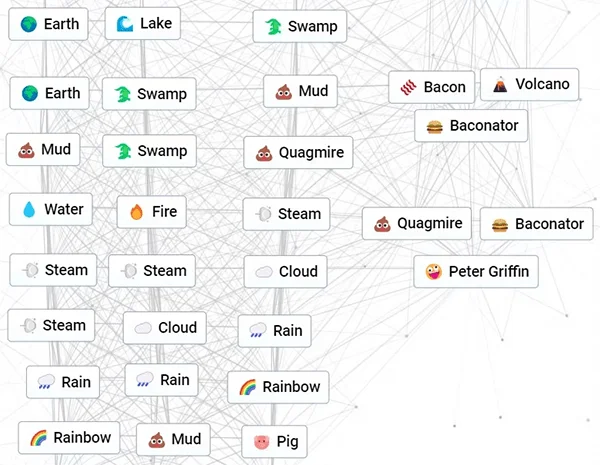
Random mixing produces results, but structured branching produces results faster. Experienced players build "utility stems" first: stable intermediate elements that combine well with many other things. Some of the most versatile stems include:
- Steam (Water + Fire) → leads to Engine, Cloud, Fog, and dozens of technology branches.
- Mud (Water + Earth) → gateway to Plant, Swamp, Brick, and civilization-related chains.
- Dust (Wind + Earth) → opens paths toward Sand, Desert, Sandstorm, and geological concepts.
- Lava (Fire + Earth) → foundation for Stone, Obsidian, Volcano, and material science branches.
Once you have a solid base of 20-30 utility elements, niche discoveries become much more targetable because you have more meaningful inputs to work with.
The "First Discovery" Badge
When you create a combination that is genuinely new across all players globally, the game awards a "First Discovery" notification. Chasing these badges is the endgame for many players. The strategy is to combine elements from completely different conceptual domains: merge a mythology element with a technology element, or a food item with a geographical concept. The more semantically distant the inputs, the higher the chance no one else has tried it.
Workspace Organization Tips
Your crafting sidebar can grow to hundreds of elements quickly. Effective players mentally group their discoveries by theme: nature, technology, mythology, pop culture, abstract concepts. When you need a specific type of element for a combination, scanning a mental category is far faster than scrolling through a flat alphabetical list. The search bar is also your best friend for finding elements you created earlier but lost track of.
Why Infinite Craft Became a Viral Phenomenon
The game captured internet culture because every surprising result feels shareable. Players screenshot absurd combinations, compete to reach specific targets, and challenge each other to craft concepts in the fewest possible steps. It turns open-ended creativity into a social game without needing multiplayer infrastructure, and that low-friction sharing loop is what kept it trending for months after launch.
Hot Games

New Games

