Little Alchemy 2
Games You May Like
Little Alchemy 2 Is a Discovery Sandbox, Not Just a Puzzle List
Little Alchemy 2 starts with four base elements and quickly opens into a huge combinational network. Drag two items together, discover a new concept, and use that concept as a building block for the next chain. The game rewards curiosity, but efficient progress comes from structured experimentation rather than pure random mixing.
The satisfying part is how simple ideas evolve into complex domains: weather, geology, biology, civilization, technology, and abstract concepts. Each discovery feels small in isolation, but together they form a giant encyclopedia that is surprisingly deep.
Branching Strategy That Speeds Up Progress
- Build utility hubs first: Steam, Mud, Energy, Metal, and Life unlock many high-value branches.
- Work by domain: Finish one mini-tree (for example weather) before jumping randomly to another.
- Recycle old elements: New items often combine with early elements in unexpected ways.
- Use the encyclopedia actively: It prevents repeat dead-ends and helps track missing finals.
Why Players Get Stuck Mid-Game
Most stalls happen when the board is cluttered and the player keeps testing low-probability pairs. A cleaner method is to pick one anchor element and test it against a focused subset. This produces clearer signal and faster breakthroughs.
Clean Workflow for Long Sessions
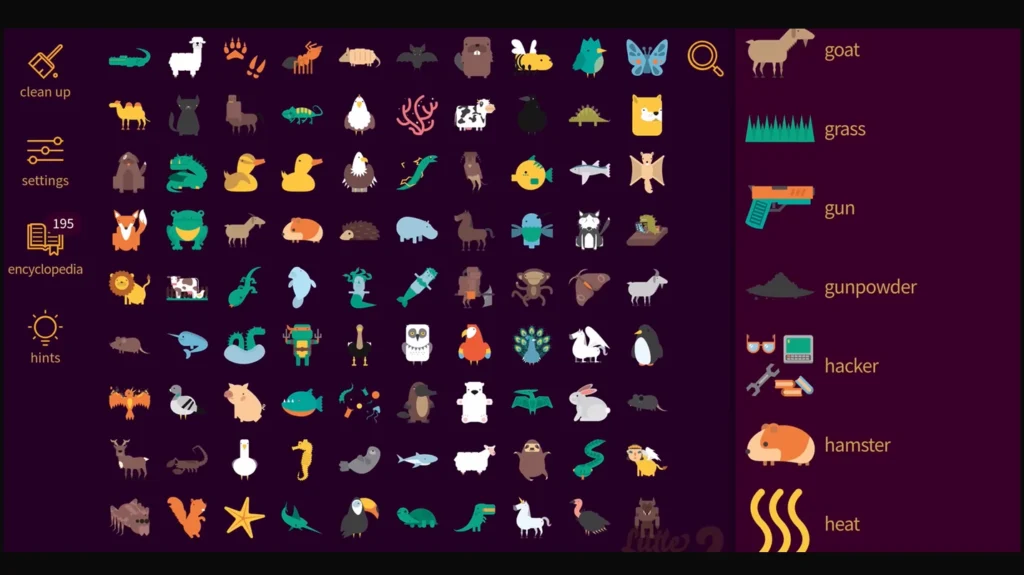
Keep the workspace organized by zones, park dead-end items at the edge, and keep active test elements near the center. This small discipline saves a lot of time over long runs and makes discovery chains easier to reason about.
Hot Games

New Games

