Santy Is Home
Games You May Like
Holiday Atmosphere Twisted into Survival Horror
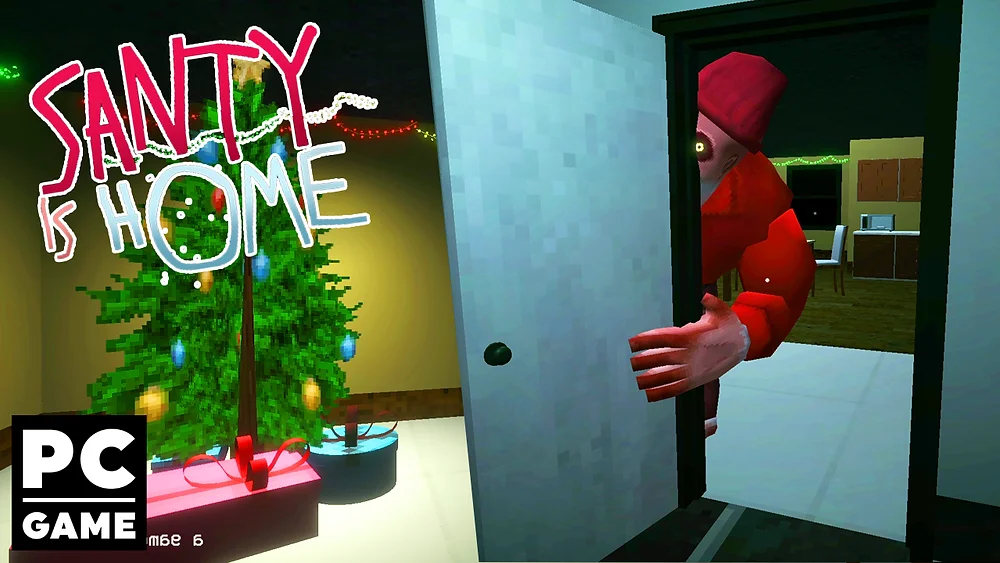
Santy Is Home takes familiar Christmas imagery and flips it into a claustrophobic stealth-horror scenario where every hallway feels unsafe. You are trapped in a house, forced to search rooms for useful items while a hostile Santy patrols nearby. The game balances jump-scare tension with slower investigative moments, creating a rhythm where curiosity and fear fight for control of every decision.
What makes it effective is the contrast. Decorations, seasonal props, and cozy-looking interiors become part of the dread because they hide danger in plain sight. You are never fully sure whether the next room contains progress, a dead end, or a new reason to run.
Stealth Is More Important Than Speed
Players who panic and sprint everywhere usually lose quickly. Santy Is Home rewards sound discipline, route planning, and careful room clearing. You need to move with intention, use hiding opportunities when patrols get close, and avoid creating unnecessary noise that pulls the threat directly to your position.
- Audio awareness: Footsteps and environmental cues often give warning before visual contact.
- Search efficiency: Checking rooms methodically prevents repeat trips that increase exposure.
- Escape sequencing: Key items usually form a chain, so knowing the order saves critical time.
- Route safety: Reliable fallback paths are essential when a search goes wrong suddenly.
Puzzle Progression Under Pressure
Like many good horror-escape games, Santy Is Home uses item gates to create tension. You find one piece of progress, which opens access to another area, which then reveals new risk zones. The challenge is that this logic unfolds while the enemy remains active. You cannot solve puzzles in peace; you solve them while managing threat proximity.
That pressure transforms ordinary object hunts into meaningful survival choices. Do you push deeper now and risk contact, or reset to a safer route and come back when the patrol cycle is favorable?
Why the Game Stays Memorable
Santy Is Home works because it maintains tension without becoming unreadable. Deaths feel avoidable. Success feels earned. Each failed attempt teaches house layout, patrol timing, or item logic, making the next run smarter. By the time you escape, you have effectively mapped the house in your head and learned how to survive inside it.
Managing Fear Without Losing Progress
One of the most interesting skills in Santy Is Home is emotional control. Fear can push players into rushed movement, noisy interactions, or greedy room entries that break otherwise strong runs. The game rewards players who can pause briefly, recheck their objective, and continue with a deliberate plan even after a close encounter.
That composure becomes especially valuable late in a run, when you have multiple required items and cannot afford a reset. Staying methodical under pressure is often the final step between "almost escaped" and a complete successful finish.
Survival Tips That Actually Help
- Move in short objectives: Clear one room or one item chain at a time instead of wandering without a plan.
- Memorize safe hide points: Fast retreat options reduce panic when Santy appears unexpectedly.
- Listen before opening space: Pausing for audio cues often prevents dangerous face-to-face encounters.
- Do not greed progress: Banking safe information can be more valuable than forcing one extra risky search.
Hot Games

New Games

