Save the Pets
Games You May Like
Simple Drawing, Surprisingly Deep Puzzle Logic
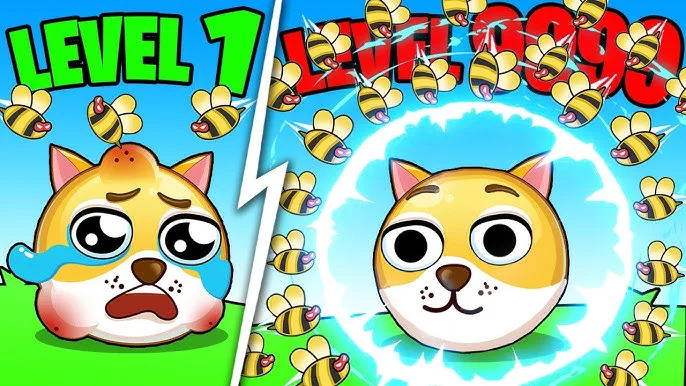
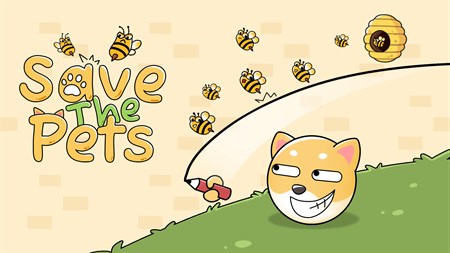
Save the Pets looks friendly and light, but its best levels demand real spatial reasoning. Your goal is to draw a protective line or shape that shields animals from danger for a short survival window. Hazards can come from bees, spikes, drops, or moving objects, so your drawing must do more than just exist. It has to be stable, correctly positioned, and structurally smart enough to hold under pressure.
The game excels at teaching through variation. Early stages show the core idea clearly. Later stages introduce geometry and timing challenges that punish lazy line placement. The result is a puzzle experience that stays accessible while still giving experienced players satisfying "aha" moments.
Why Good Drawings Beat Big Drawings
New players often draw huge barriers, hoping size alone will solve everything. But better solutions are usually compact and intentional. A smaller, well-anchored shape can outperform a giant line that tips over or leaves one vulnerable angle exposed. Efficient drawing also matters in levels with ink limits, where waste becomes a direct failure condition.
- Anchor quality: Where your line starts and ends often determines whether the structure survives contact.
- Shape stability: Triangles and supportive curves can resist pressure better than loose horizontal strokes.
- Threat direction: Barriers should block the actual hazard path, not just surround the pet randomly.
- Resource control: Short, purposeful lines preserve ink and reduce collapse risk.
How Levels Increase Complexity
As you progress, Save the Pets introduces puzzle situations where one-layer protection is not enough. You may need to account for falling forces, bounce behavior, delayed hazard arrival, or moving environmental elements. These layers make timing and prediction just as important as drawing skill.
That progression is what keeps the game engaging over many levels. You are not repeating one trick; you are refining a toolkit of structural ideas and applying them to new hazard combinations.
Consistent Solving Mindset
The fastest improvement comes from observing first and drawing second. Identify where danger originates, where it will travel, and what shape naturally interrupts that path. If a solution fails, treat it as data about force direction rather than random bad luck. Small line adjustments often solve what looks like a total design failure.
Smart Puzzle Habits
- Read hazard path first: Do not draw until you understand the primary direction of threat.
- Build from anchors: Stable contact points produce stronger protective shapes.
- Prefer simple geometry: Compact, clean structures outperform messy oversized scribbles.
- Iterate in small steps: One slight angle change can fix an otherwise solid design.
Hot Games

New Games

