Space Waves
Games You May Like
Space Waves: One Button, Two Diagonals, and No Way to Fly Straight
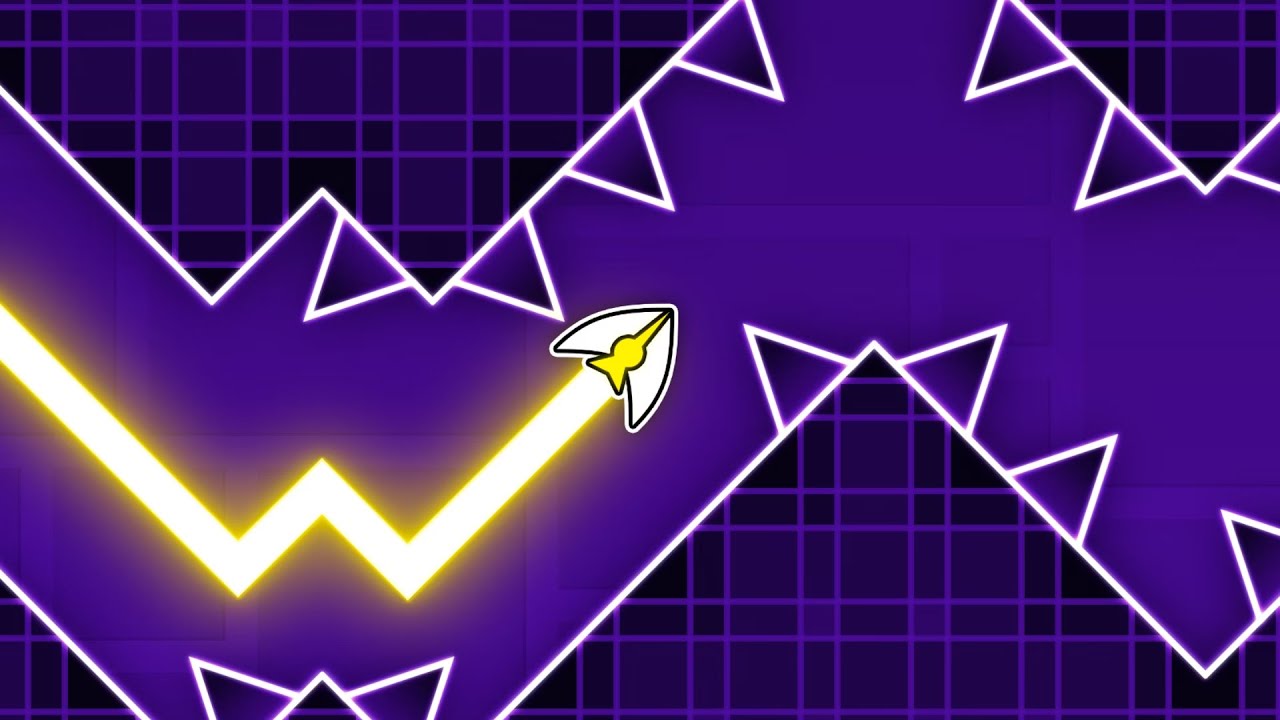
Space Waves gives you an arrow, a scrolling corridor full of things that will kill it, and exactly one input. Hold the button and the arrow climbs at a diagonal. Let go and it falls at a diagonal. That is the complete mechanical vocabulary of the game, and everything that makes it hard comes out of what that vocabulary does not include.
Built by Xelluf and published by do.games, it landed on CrazyGames in April 2024, was rebuilt on Unity 6, and is still getting updates — the most recent one landed in September 2026. It holds an 8.8 rating there, which for a free one-button browser game is unusually high, and there are now iOS and Android versions of it too.
The Rule That Catches Every New Player
Read this before your first run, because it will save you twenty deaths: gliding only takes you down. Never up, and never level. There is no neutral state, no hover, no way to hold an altitude. The arrow is always going up or always going down, and the moment you stop holding, you start losing height.
Two consequences follow, and they are the entire skill of the game:
- ⬆️ You have to climb before the climb. If there is an incline coming up ahead, you cannot wait until you reach it. It takes a moment for the arrow to start rising, so you begin the input early and arrive already at the right height. Reacting to terrain is too late; you have to pre-empt it.
- 〰️ To go straight, you zigzag. Caught in a tight corridor with obstacles above and below? Tap the button continuously. Rapid short taps average out into something close to level flight while keeping your forward momentum steady. Learning to "flutter" like this is the single technique that unlocks the hard levels.
Controls
- 🖱️ Hold Left Mouse Button, W, or Spacebar — climb diagonally.
- ✋ Release — descend diagonally. There is no separate down key, because there does not need to be.
- ⏸️ P — pause.
- 📱 On mobile — hold anywhere on the screen to go up, release to go down. Identical game, no compromises.
Three Modes That Barely Feel Like the Same Game
🎯 Classic — three worlds, free level select
The main campaign, and it does not lock anything behind progress. Every level is available from the start, so you decide how brave you are feeling:
- World 1 — simple layouts, wide corridors, gentle angles. Where you learn the flutter.
- World 2 — still forgiving, but the geometry starts to demand real timing.
- World 3 — the floor is lava. Exactly what it sounds like, and the mode that forces you into constant peaks and valleys instead of long committed lines.
♾️ Endless — one number, no finish line
No level to complete, no percentage bar. Just go as far as you can and post a score. This is where the game stops being a series of puzzles you memorise and becomes a pure reflex test, and it is the mode most people end up putting the real hours into.
🏁 Race — the mode nobody expects
Pick easy or hard across 19+ race levels and run a course against a field of other players. You cannot touch them and they cannot touch you — but you see every one of their actual movements in real time, and you see them vanish the instant they crash. A tracker along the top shows who is leading and how much course is left.
Which creates a wonderfully cruel little trap: checking the leaderboard means taking your eyes off your own arrow, and the game does not pause while you do. Plenty of races are lost to a glance at the standings.
80+ Levels, Colour-Coded by Nerve
There are more than eighty handcrafted levels, and the game tells you what you are walking into before you commit. Levels carry a difficulty face and colour — green for wide spaces and gentle angles where you can build clean straight momentum, running all the way up to red for tight, dense, relentless geometry. Pick a face that matches your mood; there is no penalty for starting easy and no gate stopping you from throwing yourself at a red one immediately.
What Actually Kills You
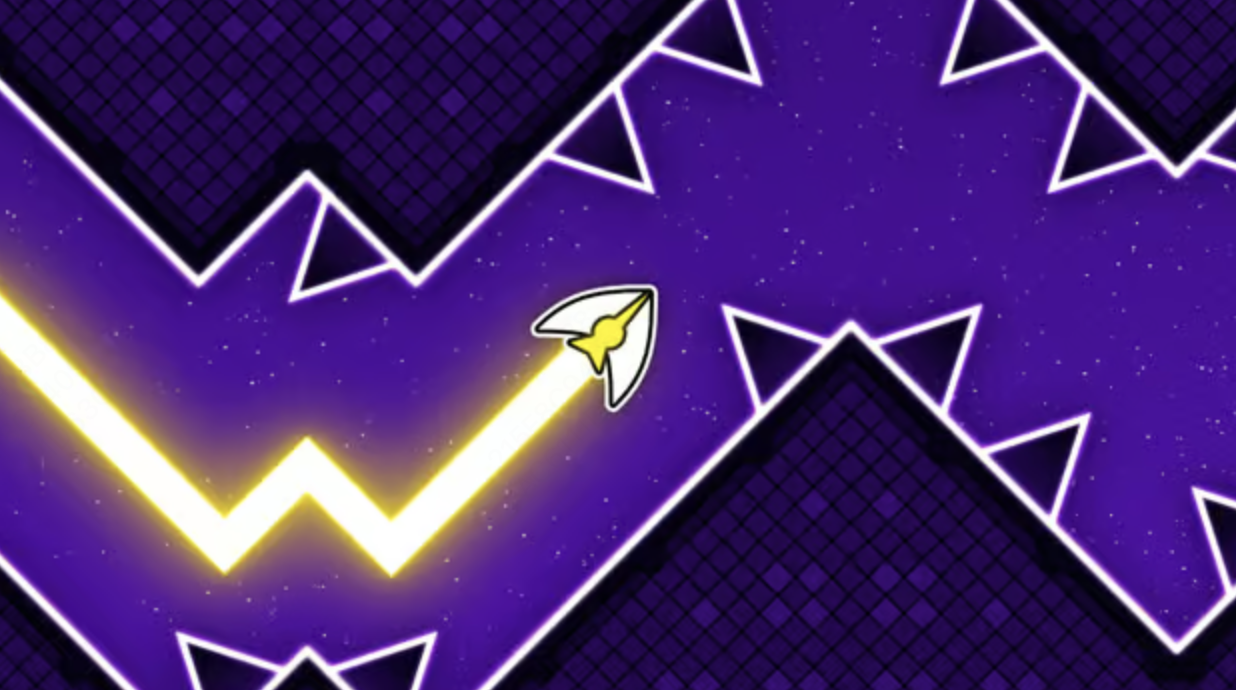
Three hazards, and each one wants a different answer:
- 🧱 Walls — the level geometry itself. Solved by pre-empting: start your climb early and arrive at the right height.
- ⚙️ Rotating cogs — moving hazards that turn a static gap into a timing window. You are not dodging a shape, you are dodging a shape at the right moment.
- 🌸 Thorns and circular spikes — and here is a genuinely counter-intuitive piece of advice: with circular spike clusters, stay low and go under rather than trying to climb over them. The arrow rises slowly, and the attempt to clear the top is what kills most players.
Practice Mode, and the Percentage That Haunts You
Every crash tells you exactly how far through the level you got, as a percentage. It is a small thing that turns a failure into a measurement, and it is the reason "one more go" works on this game so effectively — 92% is unbearable in a way that "you died" never is.
If a level is genuinely walling you, practice mode lets you restart from your last crash point instead of the beginning, so you can drill the one section that keeps ending you rather than replaying the ninety percent you have already solved. Outside of practice, you will sometimes be offered a single resume from where you fell — take a breath before accepting, because you get exactly one.
Skins
Cosmetic, but there is a decent spread: a fiery arrow, a rounded arrow, and a range of colour variants to pick from. None of it changes the physics — it just means the thing you are about to crash looks how you want it to.
Getting Good at Space Waves
- Do the tutorial. Genuinely. It is short, and it teaches the pre-emptive climb that the rest of the game silently assumes you already understand.
- Tap, do not hold, in tight corridors. A held input is a commitment to a diagonal. Rapid taps are how you travel horizontally, and horizontal is where most of the safe paths are.
- Start every climb early. The arrow has inertia. Whatever you are trying to clear, begin the input before it feels necessary.
- Go under circular spikes. Instinct says climb over. Instinct is wrong here.
- Use the colour codes honestly. Grinding a red level for an hour teaches you less than clearing three greens and internalising the rhythm.
- In Race, ignore the tracker. The standings will still be there when you finish. Your arrow will not.
- Drill the section, not the level. Practice mode exists so you can fail the hard fifteen seconds forty times in a row instead of replaying the easy minute before it.
So Is It Just Geometry Dash?
It gets asked enough that CrazyGames answers it in their own FAQ, and the honest answer is: it is clearly in the same family. Both are rhythmic, scrolling, one-touch precision games where you memorise a course and die a lot. But Space Waves is narrower and purer — there are no vehicle switches, no jumping cube, no mode changes mid-level. It is one movement type for the entire game, which makes it far easier to pick up and, at the red end of the difficulty scale, arguably harder to master. If you burned out on Geometry Dash’s complexity, this is the version that strips it back to the single hardest thing.
Hot Games

New Games

