OvO Dimensions
Games You May Like
OvO Dimensions: Four Arrow Keys and Physics That Refuse to Stay Still
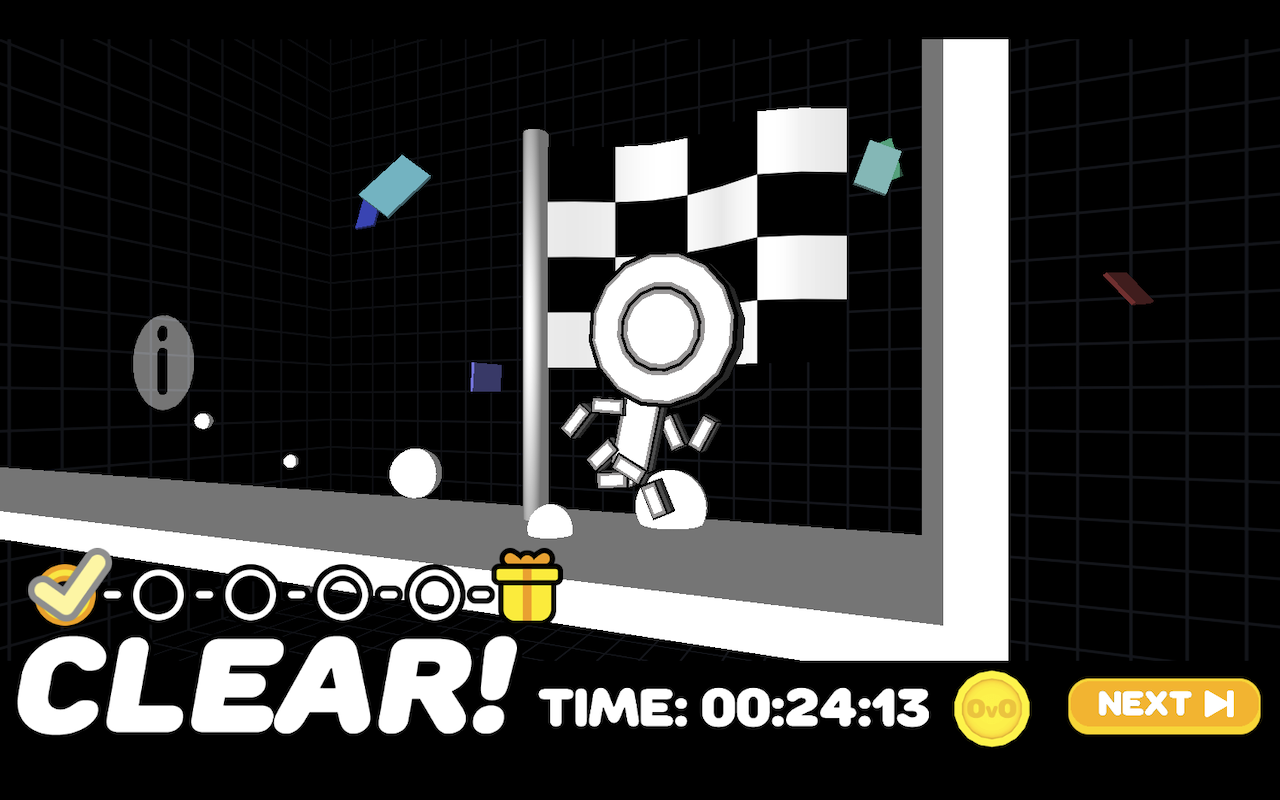
OvO Dimensions gives you a stickman, an exit flag, and a moveset small enough to explain in one sentence. Then it spends 80 levels proving that you did not really understand it. This is a precision parkour platformer in the purest sense — no combat, no collectibles you need, no story. Get to the flag. Get there fast.
It comes from Dedra Games, a French studio, published alongside Venturous, and it was their first game on Poki when it landed in November 2022. It now sits at 4.1 from over 72,000 ratings, and it plays on desktop, phone and tablet.
Controls
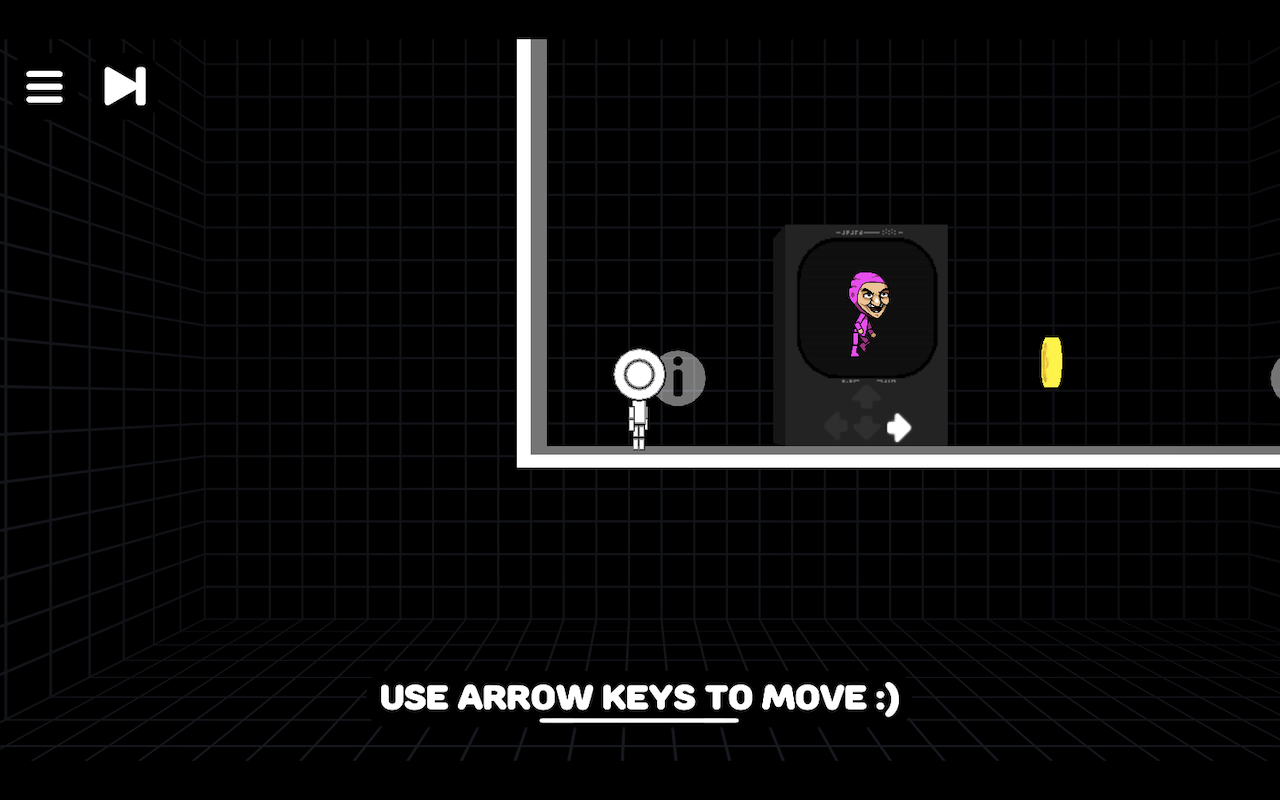
- ⬅️➡️ Left / Right — run. Momentum matters, so top speed takes a moment to build.
- ⬆️ Up — jump. Hold it against a wall on contact to wall-jump.
- ⬇️ Down — on the ground it is a slide; in the air it is a ground-pound.
Four keys, four actions. That is the entire game, and it is deliberately less than most platformers give you — there is no dash button and no separate double jump. Everything beyond those four moves has to be produced by combining them.
The Moveset Is Tiny. The Combos Are the Whole Game.
This is the part that separates people who finish OvO Dimensions from people who quit at world three, and the game does not spell it out. Two specific combinations give you power that no single input can:
- 🏃 Slide → Jump = the long dive. Press jump immediately after the slide starts, not after it ends. Timed right, you convert your slide speed into a low, fast, enormously long jump. This is how you cross gaps that look impossible.
- 💥 Ground-pound → Jump = the launch. Slam down with Down in mid-air, then hit jump at the exact moment you land. The impact bounces you far higher than a normal jump ever will. This is how you reach ledges that look out of range.
Both windows are tight, and both are the answer to a huge number of levels. If a section looks like it needs a move you do not have, you are almost always missing one of these two.
Ground-Pound Does Three Different Jobs
Worth knowing separately, because most players only ever use it for one of them:
- ⬇️ Drop fast — cut a floaty descent short when you need to land now.
- 🪟 Smash breakable glass — some floors only open if you come through them hard.
- 🧲 Snap onto moving platforms — instead of trying to time a gentle landing on something that is sliding away, drop onto it and stick.
Eighty Levels Across Eight Worlds
The game is structured as 8 themed worlds of 10 levels each, and the worlds are not just new backgrounds — each one changes a rule and then makes you re-learn your own moveset under it. Among them:
- ❄️ Frigid Peak — slippery surfaces, where the momentum you have been building becomes a liability.
- 🚀 OvO Space Program — low gravity. You float much further, which sounds generous until you realise you now overshoot every platform you used to land on.
- 🪐 Planet X — the precision world. Tighter margins, less forgiveness, no room for a sloppy combo.
- 🌀 Chaotic Dimension — the finale, which throws every mechanic from the previous seven worlds into the same levels.
What "Dimensions" Actually Refers To
The name is doing real work. Where the original game was straight parkour, this one keeps interfering with the space you are moving through: gravity flips, portals you launch through at speed, and shifts in scale and perspective. A room you have already read can invert underneath you, and suddenly your muscle memory for which way is up is actively working against you.
That is the design idea. Your four moves never change; what changes is the world they operate in, so mastery is not about learning new abilities but about re-deriving the same ones under new physics.
The Gauntlet
Every hard platformer has the stretch people talk about, and here it is levels 53 to 60. This run is widely regarded as the game’s real difficulty wall, and level 60 in particular — where the gravity-shifting mechanics are at their most tangled — is the one that ends most attempts at completing the game.
If you get there, treat it as a separate game. The skills that carried you through worlds one to five are necessary but nowhere near sufficient.
Dimensions or OvO Classic — Which Should You Play?
Both exist, both are good, and they want different things from you.
OvO Classic is the original: pure parkour with no environmental tricks, built around compact levels designed for speedrunning. If what you want is to shave seconds off a clean line you already know, Classic is the tighter experience.
OvO Dimensions is the follow-up, and it trades some of that purity for variety. More levels, more worlds, and a constant supply of new rules to solve. If you want the game to keep surprising you rather than keep timing you, this is the one.
The moveset is the same in both, so time spent in either transfers directly to the other.
How to Stop Dying
- Learn the slide-jump before anything else. Press jump right as the slide begins. Practise it on flat ground in an early level until it is automatic — it is the single highest-value input in the game.
- Ground-pound higher than feels necessary. The launch scales with your fall, so starting the slam from a greater height gives you a bigger bounce.
- Do not stop running. Nearly every hard jump in this game is a momentum problem, not a timing problem. If you keep coming up short, you started from a standstill.
- Wall-jumps are for climbing, not saving. Use them to gain height deliberately rather than as a panic response when you have already missed.
- Re-read the room after a gravity flip. Stop moving for a second and work out where the floor is now. Charging on instinct into an inverted section is how the Gauntlet gets you.
- Restart instantly on a bad start. If your run into a section began wrong, the rest of it will not fix itself. These levels are short — restarting costs almost nothing.
- Low gravity means slow down. In OvO Space Program, your instinct to hold a direction will sail you past every landing. Tap and drift instead.
If You Like This One
For the same "read it early, move before you need to" precision in a different shape, Neon Challenge Legends runs a one-button version of the idea with hidden stars to complicate your route. And if you want a platformer that is genuinely trying to break you rather than train you, Getting Over It with Bennett Foddy is the other end of that scale entirely.
No download, no account — pick a level, learn the slide-jump, and go find the flag.
Hot Games

New Games

